Background
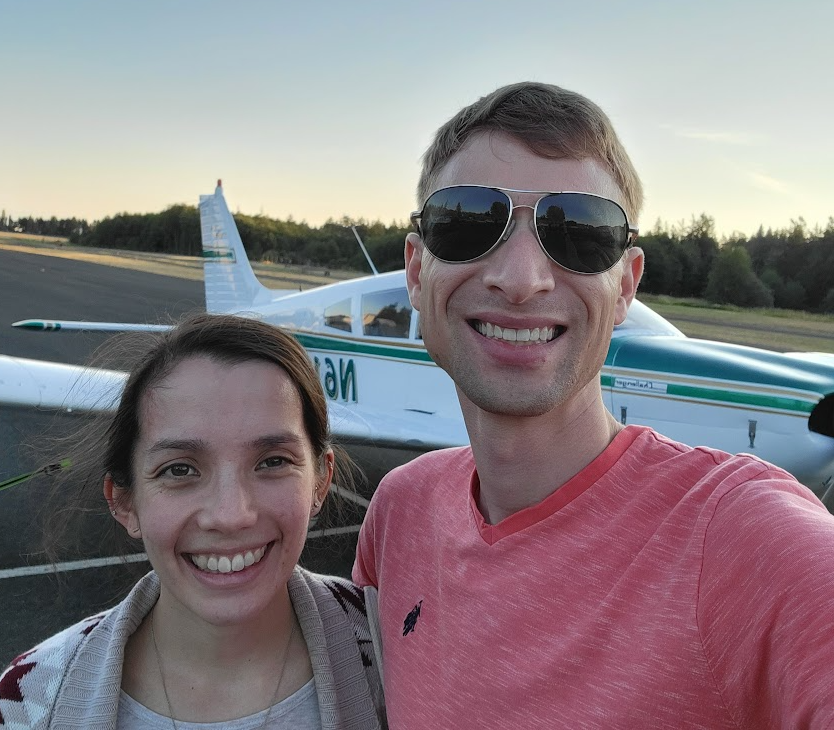
My name is Chris Seto. I’m an embedded firmware engineer living with my wife in Seattle. I’ve been a pilot for the last 13+ years. In that time, I became a CFI and stepped through owning or partnering in four different airplanes.
This blog is my build log for my new RV10 project.
It’s impossible to discuss a new airplane acquisition without mentioning The Mission (TM), so I’ll outline mine here:
- I primarily use my airplane because I enjoy flying and being a part of the flying community
- I often give rides to non-pilot and pilot friends alike, usually to the San Juans
- I have friends at KORS, and I often fly up there to visit them over the weekend
- I work in the Bay Area, and sometimes commute from Seattle to KHWD by GA
- Secondarily, I use my airplane to personally remain instrument current and capable
N610SH
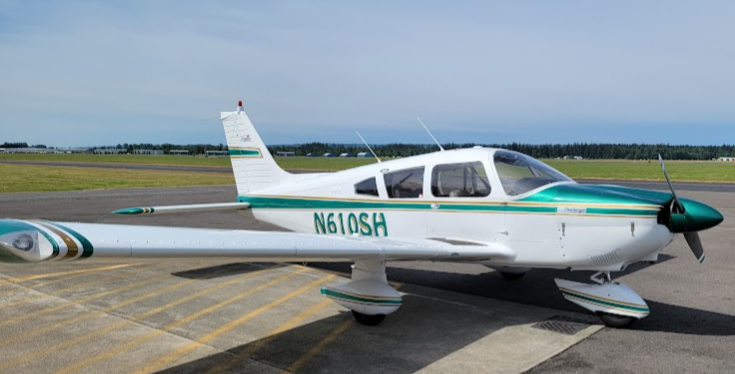
My current airplane is a PA28-180, N610SH hangared at Auburn Municipal, about 40 minutes south of where we live in Seattle. I’ve owned 0SH for about 6 years at the time of writing, and honestly, I could never have hoped for a better airplane for this period of my life. 0SH is a Cherokee “Challenger”. The Challengers were only produced between 1972-73 (before anyone tries to correct me that it was only 1973, mine was actually produced in `72). The Challenger is primarily characterized by its Hershey bar wing, but with all of the “modern” amenities of an Archer II (throttle quadrant vs knobs, floor mounted trim wheel vs lasso trim, stretched fuselage, larger dorsal fin, etc). That mix makes it a mix between the old and new generation of PA28s. It seems like people prefer the Hershey bar wing over the taper wing, so this makes the Challenger a desirable type. There weren’t that many Challengers produced, something like 600 exist in the world today, so they are somewhat rare.
0SH builds on the rarity of the Challenger heritage and was extensively refurbished by Command Aviation at KBLI. I know little about the airplane before this refurbishment, but my understanding based on logbooks is that the airplane was in fine condition, but was just outdated and vanilla in terms of amenities.
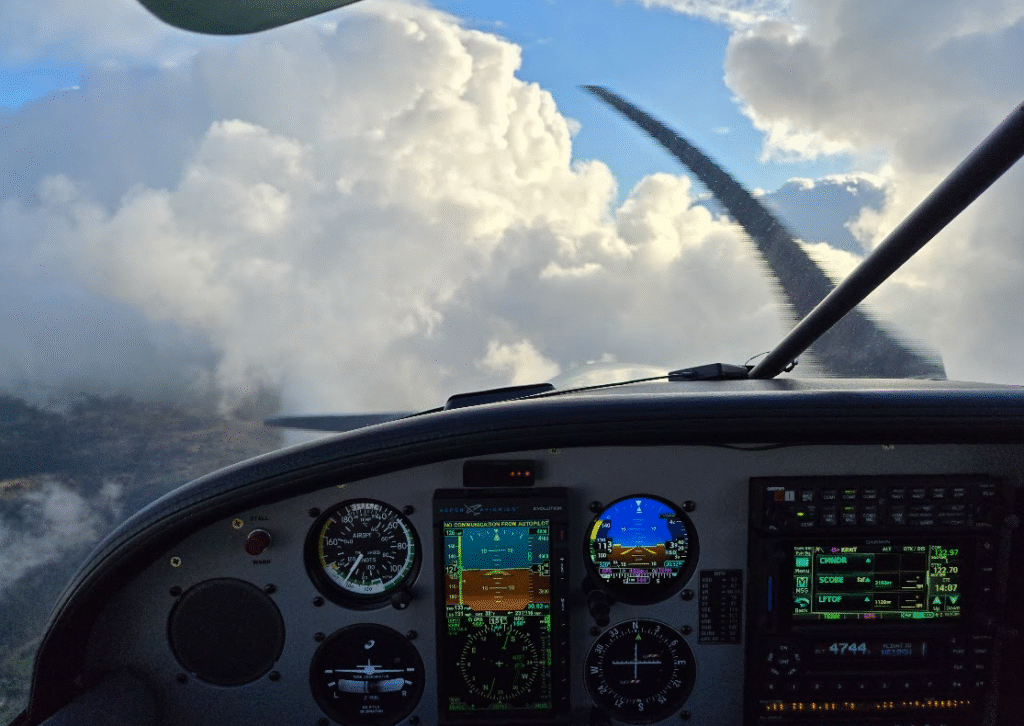
Command did an incredible job restoring the airplane inside and out. Fully new interior, new thicker windows, noise proofing, one piece windshield, new CNC cut panel with Aspen PFD + GNS530W, every aeromod available installed, new LED interior lights, 3x HID landing lights, Lopresti wingtips… the list goes on.
I bought the airplane at a time when there was minimal froth in the market. In retrospect, I got a /screaming/ deal on it. At the time, it was a lot for an airplane, but I had a feeling that it was worth it. With aircraft prices skyrocketing during/post covid, and a 6 year long history of no real mechanical issues, this turned out to be one of the best purchasing decisions I’ve ever made.
Owning and flying 0SH has been great, but there are a few things that continually bug me:
- Truing 150MPH, it’s fast for a FG Cherokee, but my trip to the Bay Area is kind of a slog
- Climb performance is not great
- It’s an inefficient airplane with probably 10G less fuel capacity than I’d like
- Useful load is only about 800lbs
All of these factors combine to take a decent chunk of usefulness out of the airplane. Consider on my trip to the Bay Area, I’m refueling once, and then spending a lot time climbing back up to altitude, taking a bit hit to airspeed the entire way.
These factors let me to consider the possibility of a new airplane. I had considered buying a new DA40 or Cirrus, but even with the eye watering price of these airplanes, you don’t buy your way out of issues. For example, the DA40 would require a larger hangar (VERY hard to find in Seattle) and even after spending all that money, I’d be left with a underperforming airplane. I could fit a Cirrus in my hangar, but I’d heard too many horror stories about MX issues and long lead times (especially for the parachute repacking).
I had not put serious thought into an experimental, mostly because I knew with my work schedule, it’d be hard to find the time to build the plane. That’s not the only issue. My wife and I live in an apartment, and the airport is 45 minutes away. It’d be a major time commitment to even go to the airport to work on the plane. The last thing I want is a kit which sits around, accumulating minimal progress.
It occurred to me that of the experimentals, both the RV10 and Sling would likely fit my mission if I could get through building one. I was initially strongly considering a Sling, mostly because of their extremely generous build assist program. After flying one in LA at The Airplane Factory, I decided that it seemed like too small of a step up from the Cherokee. It was kind of small inside and while it did go MUCH faster, It didn’t quite go fast enough. I felt like the RV10 was the more senior option in every way, unfortunately, including build difficulty.
One of my few local contacts into the experimental world was Justin, who owns a mechanical engineering consultancy. I called him up and asked what he thought about doing some kind of build assist for an RV10. He told me that this would really be something Ephraim at Experimental Aircraft Services could do justice. I used to be based at AWO, and I had met Ephraim, but only really in passing on several occasions. Funny enough, the first time we really talked was when he helped me drag my Subaru BRZ out of the snow and ice outside my hangar one winter day.
Ephraim seemed excited at the prospect of a build assist RV10, and had schedule time for it. This RV10 project was now viable!
In November of 2024, I begin the first wave of the ordering process. From Vans, I ordered the empennage, QB Fuse, QB wings, and finish kit. From Barret, I ordered a wide deck IO-540 with CAI, roller tappets, dual P-Mag EIS, and B&C alternator primary and standby.
Going the cold air induction path set off an avalanche of parts changes. I deleted the cowl from my finish kit order with Vans and bought a Showplanes cowl/induction system (and composite tailcone, unrelated).
Ephraim recommended Aerotronics for the panel, and I booked production time in October. Ephraim and I formally engaged with a build start time in August of 2025.